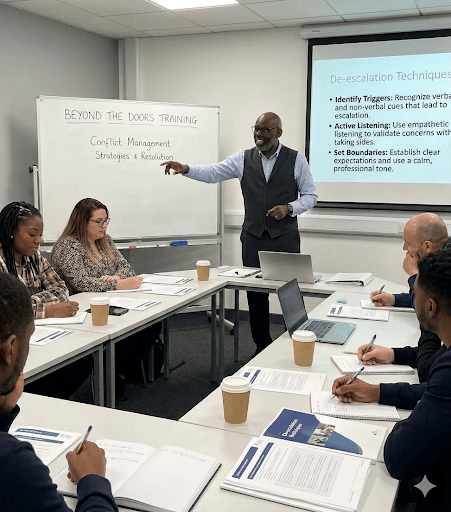
Effective de-escalation can prevent conflicts from escalating into dangerous situations. Learn the verbal and non-verbal techniques that hospitality and retail.
In the fast-paced environments of hospitality and retail, employees regularly interact with a wide range of customers. While most interactions are positive, situations can occasionally become tense or confrontational. Effective de-escalation techniques can help prevent conflicts from escalating into dangerous situations, ensuring the safety of both staff and customers while maintaining a professional atmosphere.
De-escalation refers to a set of communication strategies used to calm an agitated or frustrated individual. Instead of responding with defensiveness or confrontation, employees use controlled communication and body language to reduce tension and guide the situation toward a resolution.
Hospitality and retail professionals are often the first point of contact for customers. When a customer feels unheard or frustrated, emotions can quickly intensify. Staff members who are trained in de-escalation techniques can manage these moments effectively, protecting the brand’s reputation while ensuring a safe environment for everyone involved.
While many situations can be resolved through communication, there are times when additional assistance is necessary. If a customer becomes aggressive, threatening, or refuses to calm down, employees should follow company protocols and involve supervisors or security personnel.
Training staff in de-escalation techniques not only helps manage difficult situations but also improves overall customer service. When employees feel confident handling conflicts, they are better equipped to maintain a welcoming and safe environment for everyone. By combining calm communication, empathetic listening, and mindful body language, hospitality and retail professionals can transform tense situations into opportunities for positive resolution and improved customer relationships.