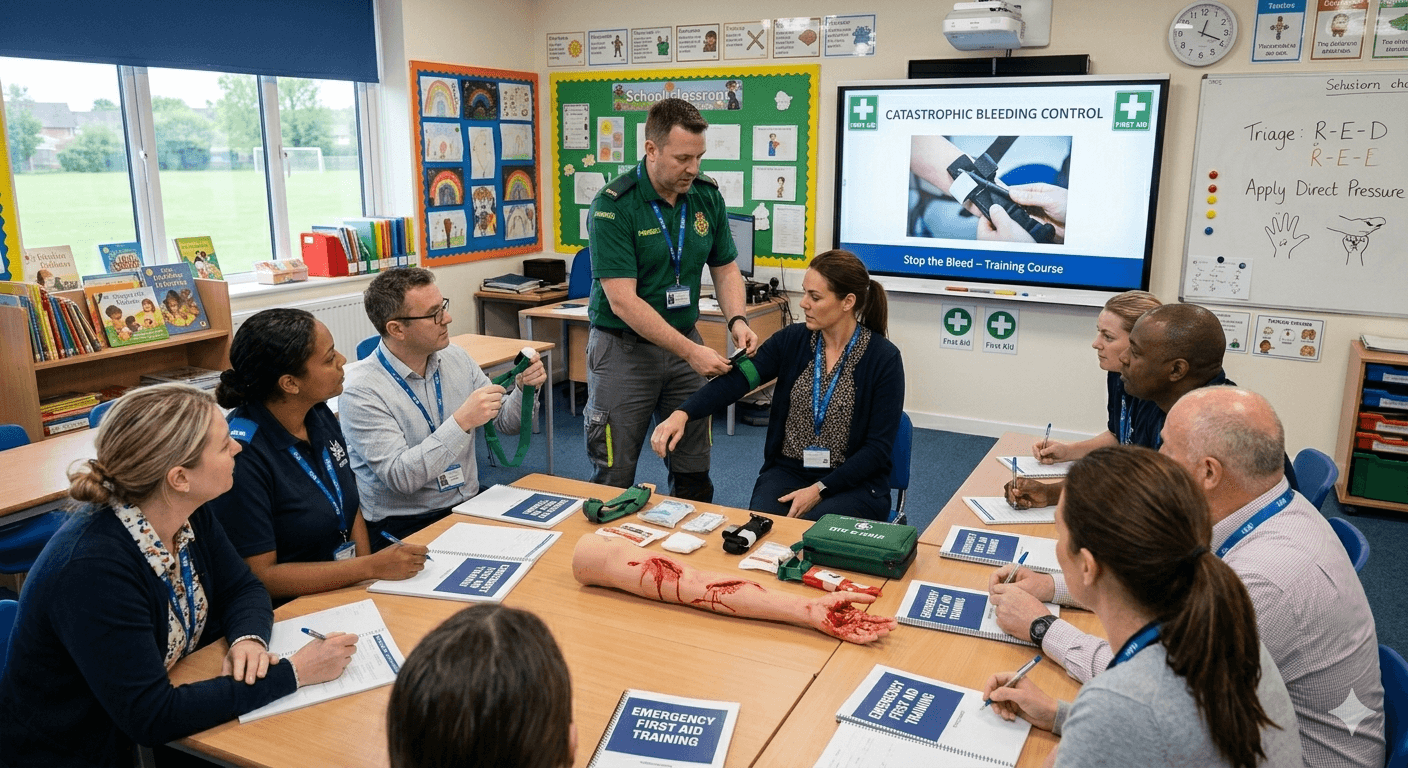
Catastrophic bleeding is one of the most life-threatening emergencies a person can experience. When severe bleeding occurs, every second counts.
Catastrophic bleeding is one of the most life-threatening emergencies a person can experience. When severe bleeding occurs, every second counts. Without immediate action, a person can lose a critical amount of blood within minutes. Knowing how to recognise and respond quickly can make the difference between life and death.
This guide outlines the key steps to identify catastrophic bleeding and how to respond safely and effectively until professional medical help arrives.
Catastrophic bleeding refers to severe, uncontrolled bleeding that can rapidly lead to shock or death if not treated immediately. It is commonly caused by traumatic injuries such as deep cuts, accidents, machinery incidents, or violent injuries.
If any of these signs are present, it is critical to act immediately.
Before helping the injured person, quickly check that the environment is safe for you and others. Hazards such as traffic, machinery, fire, or unstable structures can put responders at risk. Only approach when it is safe to do so.
If possible, ask someone nearby to call emergency services immediately.
The most effective first action for catastrophic bleeding is applying firm pressure directly to the wound.
If blood soaks through, do not remove the first dressing. Instead, place another dressing on top and continue applying pressure.
Direct pressure helps slow or stop the blood flow and allows clotting to begin.
If bleeding cannot be controlled with direct pressure, a tourniquet may be required.
A tourniquet should be placed:
If a commercial tourniquet is not available, an improvised one can be made using strong cloth or a belt, though proper tourniquets are always preferred when available.
Once applied, do not loosen or remove the tourniquet until trained medical personnel take over.
If possible:
Severe bleeding can quickly lead to shock, so keeping the person still and calm is important.
Continue to monitor the casualty until emergency services arrive.
Watch for:
Stay with the person and maintain pressure on the wound.
A person experiencing catastrophic bleeding can lose a fatal amount of blood in as little as 3–5 minutes. Immediate intervention by bystanders significantly increases survival chances.
Learning these simple steps ensures that in an emergency, you can act confidently and potentially save a life.
Catastrophic bleeding is a medical emergency that requires rapid recognition and immediate action. By staying calm, applying firm pressure, and seeking emergency help, anyone can provide critical assistance before professionals arrive.
Basic emergency response training can empower individuals to handle situations like these safely and effectively. In emergencies, preparedness saves lives.